Skip to main content

How STEAM brings art together with science, technology, engineering and maths, why the 'A' matters, and the projects we use to build it in children.
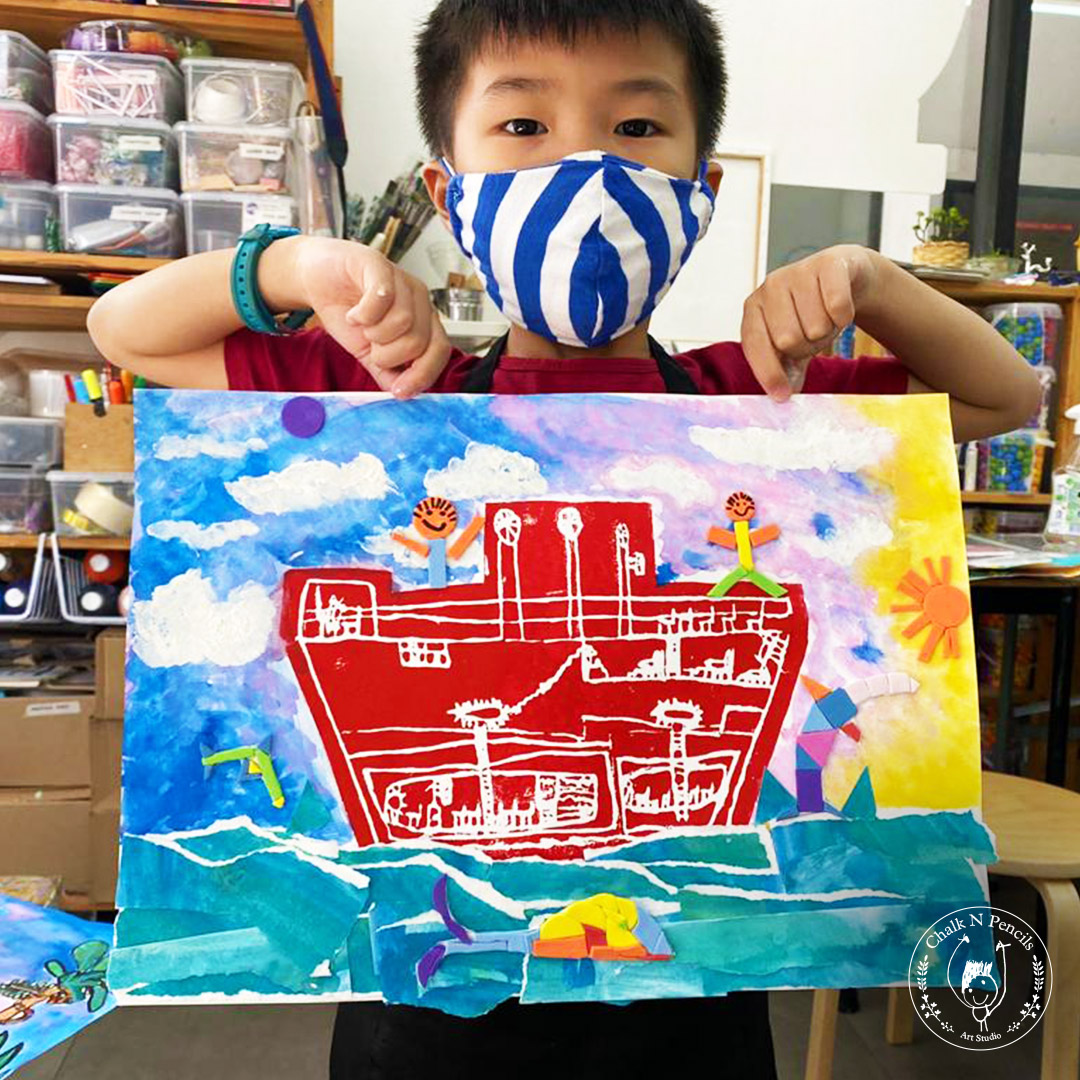
STEAM is more than a buzzword. It is Science, Technology, Engineering, Arts and Maths taught together rather than in separate boxes, and the art is what ties the rest of it into something a child actually wants to do. When a project asks a child to observe, design, build and explain, they are using all five at once. Here is what STEAM education really means, why the A matters, and the kind of projects we use to build it.
Science, technology, engineering and maths reward logical thinking and getting to the right answer. Art adds the part those subjects do not naturally teach: how to come up with the idea in the first place, and how to make something nobody asked for. Both halves rely on the same habit, close observation, but art is where a child learns to take what they have noticed and turn it into something of their own.
That is why innovation so often comes from combining fields. A child who can see the connection between a geometric pattern and a building, or between colour mixing and chemistry, is learning to think across subjects rather than within one. For more on how that observation habit develops, see our guide to art appreciation for children. For the reasoning side of the same habit, see how art builds critical thinking in children.
The idea is simple to say and harder to do well: give children a real problem and let the solution draw on more than one subject. A few examples from our own classes:
None of this is taught as a lecture. The child is making something they care about, and the science, maths and engineering are simply how they get there.
The skills outlast the project. STEAM work, done properly, builds:
Singapore schools are increasingly weaving the arts into a curriculum that has always been strong on science and maths, and parents are looking for the same balance outside school. Our children's art classes are built around exactly this kind of cross-subject making, so a child is never just colouring in: they are observing, planning, building and explaining as they go. It is the same thinking behind our guide to the benefits of art for children.
Our children's art classes are built around cross-subject projects, observing, planning, building and explaining, at Katong Point and New Bahru. See how a term is structured.
STEM is Science, Technology, Engineering and Maths. STEAM adds an A for the Arts, recognising that creativity and design matter as much as logic in a technology-driven world.
Any age. Even very young children benefit from STEAM-style activities that involve exploring, making and solving small problems with their hands.
Give children hands-on, open-ended things to do: art projects, simple experiments, building, even cooking and gardening. The point is making and figuring things out, not worksheets.
Problem-solving, collaboration, a feel for how things are made, and the confidence to try an idea that might not work, which is where the real learning is.