Skip to main content

Art is one of the most overlooked ways to build critical thinking in children. How making and looking at art teaches observation, judgment and problem-solving.
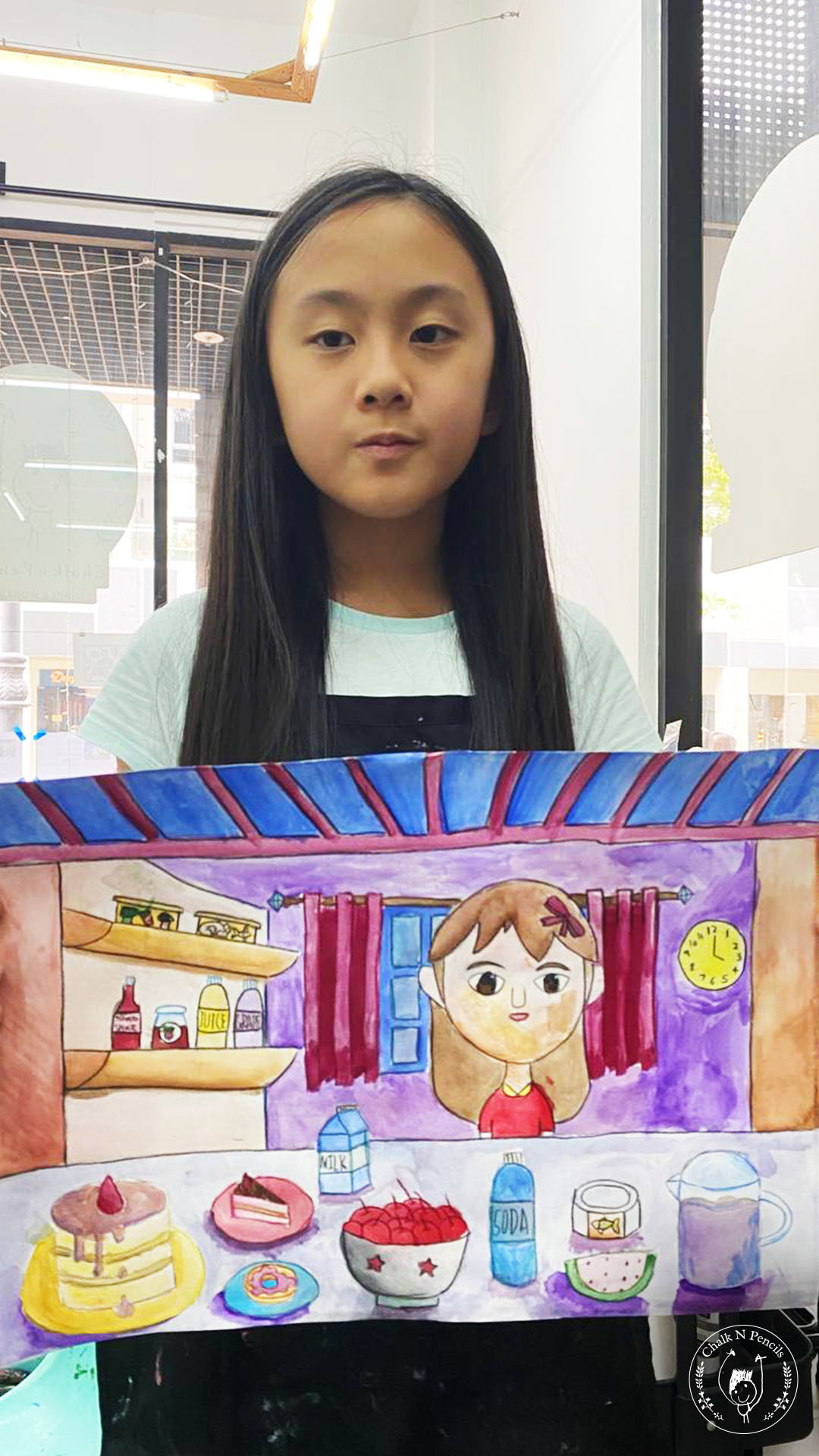
Critical thinking is not about how much a child knows. It is about questioning, analysing and making sense of what they know, and one of the most effective ways to build it is also one of the most overlooked: art. Making art is a constant loop of observing, deciding, problem-solving and reflecting, which is critical thinking in everything but name.
When a child makes art, they are not putting down random marks. They are deciding what to make, how to make it and why, then judging the result and adjusting. Working out how to show depth on a flat page, or which colours carry a particular mood, is genuine problem-solving. Looking carefully at a finished piece, their own or someone else's, is analysis. The habit transfers: a child who learns to look and reason in front of a drawing tends to do it elsewhere too. It is the same reason art is the A in STEAM education, where creative reasoning ties the other subjects together.
You do not need to be artistic yourself. A few small shifts make the difference:
A structured class gives this room to grow. In our children's art classes we build it in through storytelling and through the back-and-forth between teacher and child: rather than handing over a model to copy, we ask children to make decisions and explain their reasoning as they work. It is closely tied to how a child's judgment matures over time, which we cover in our guide to the stages of artistic development.
Our children's art classes are built on real choices and reasoning, not copying a model, in small age-grouped sessions at Katong Point and New Bahru. See how a term is structured.
They are closely linked. Creative work constantly asks a child to make and judge choices, which is critical thinking in practice.
By making children observe, interpret and reflect, and by setting real problems to solve. All of those sharpen attention to detail and reasoning.
The same habits, careful observation, problem-solving and decision-making, carry straight into schoolwork, which is why critical thinking through art tends to show up well beyond the art table.
Early. Even young children can be asked simple why and how questions about their work; the reasoning simply gets more sophisticated as they grow.