Skip to main content

The stages of children's artistic development, from scribbling to realism, what each one looks like, and how to support an artistic child at every stage.
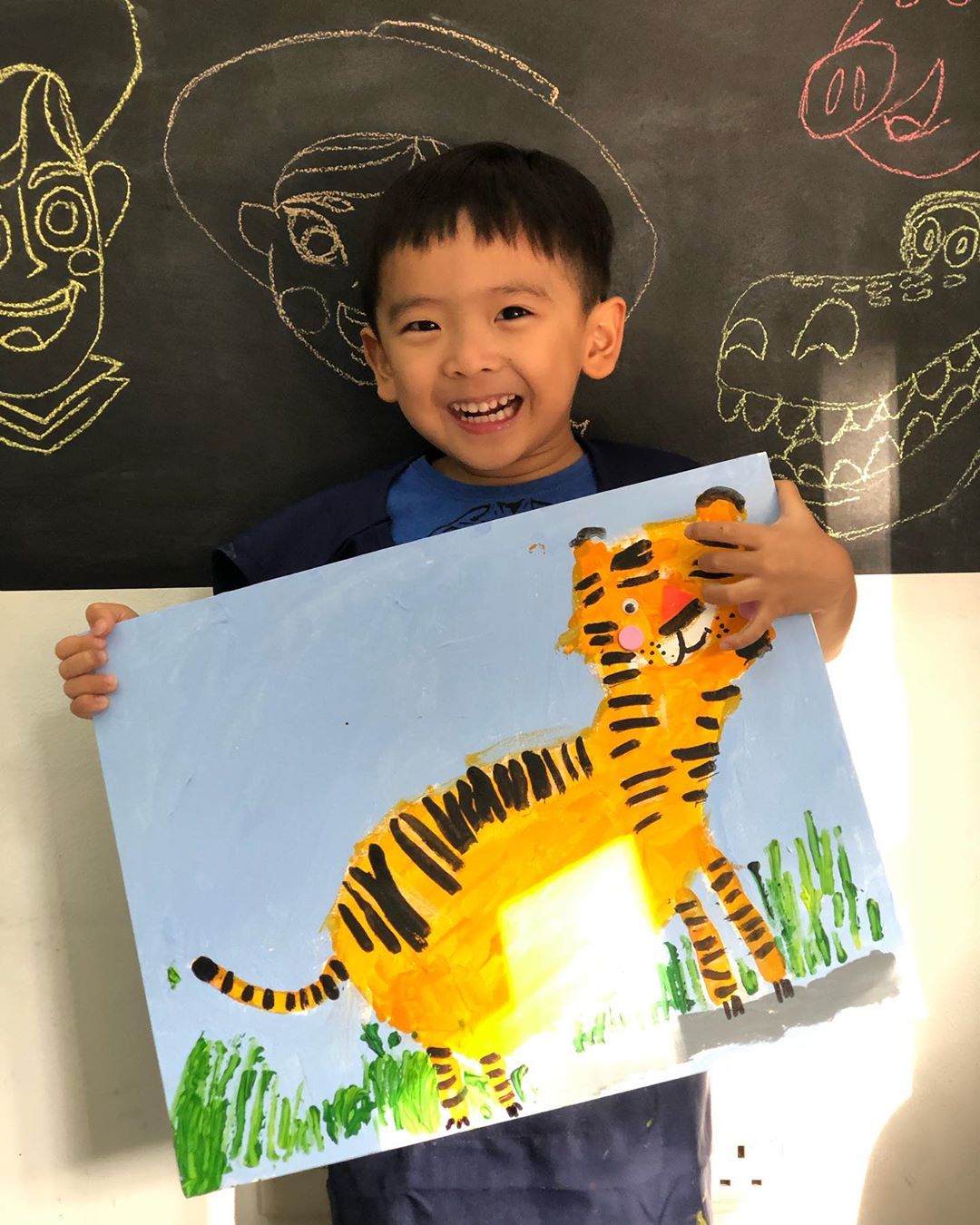
Every child's art grows in a surprisingly predictable way, from first scribbles to detailed, deliberate pictures. These stages of artistic development are not about talent, and they are not a race. Knowing roughly where your child is helps you support them in the right way, without pushing for results they are not ready for, or holding them back when they want to leap ahead.
Artistic development is the natural progression in how children make art as they grow. Just as they move from babbling to words to sentences, they move from random marks to symbols to representation. Every child travels roughly the same path, though at their own pace. Understanding it takes the worry out of the wonky drawings and helps you see the thinking behind them.
The stages below are a well-known guide to how children's art typically develops. The ages are approximate, so treat them as signposts rather than deadlines.
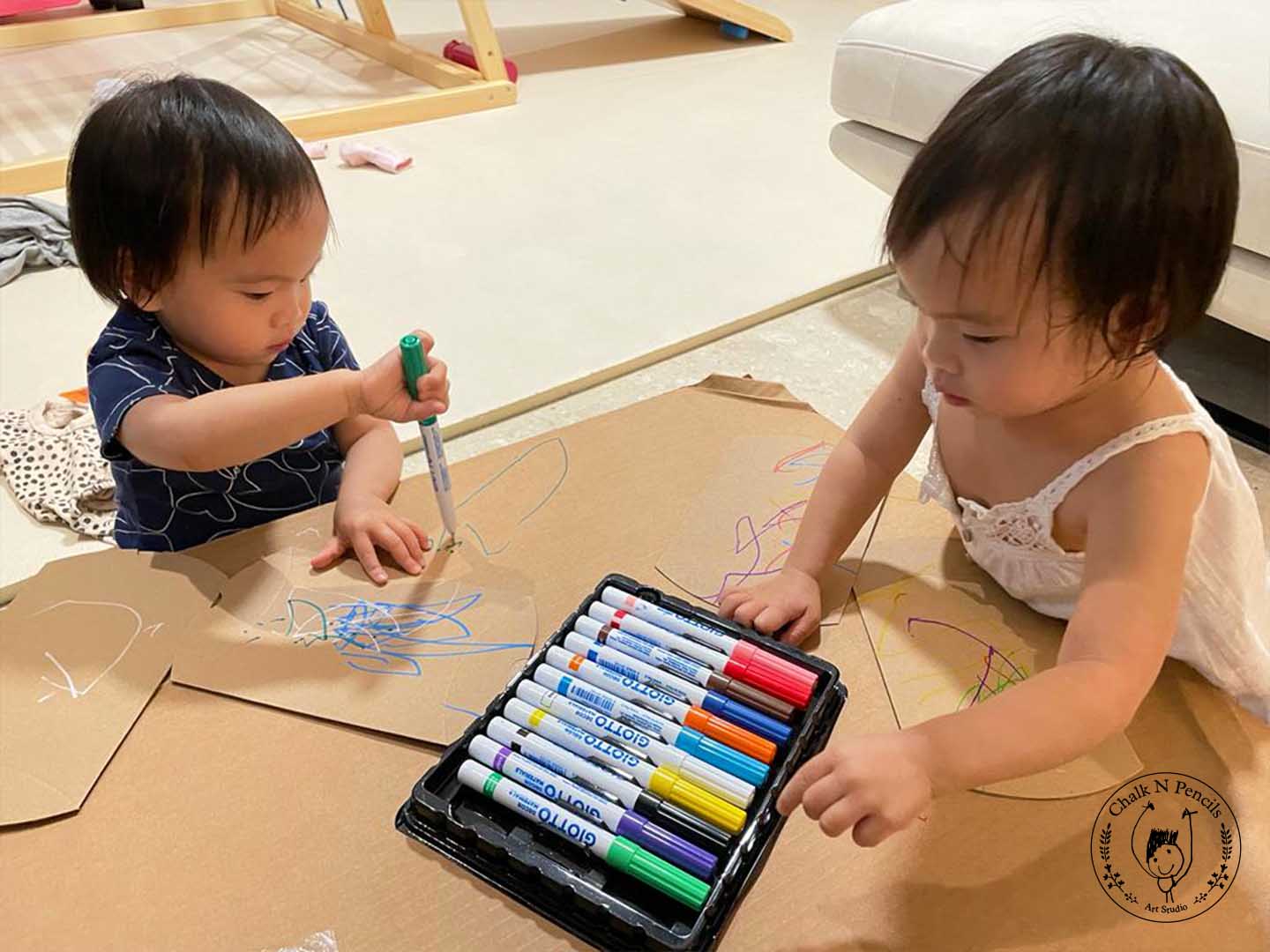
It starts with pure mark-making. Early scribbles are about the joy of movement and the discovery that a hand can leave a trail. Gradually they become more controlled, and your child may name them after the fact ("that's a dog"). This stage is sensory and motor, and it matters: it builds the control everything else is made from. If your child is at this stage, our guide to the benefits of art for toddlers goes deeper into nurturing these first messy, sensory experiments.
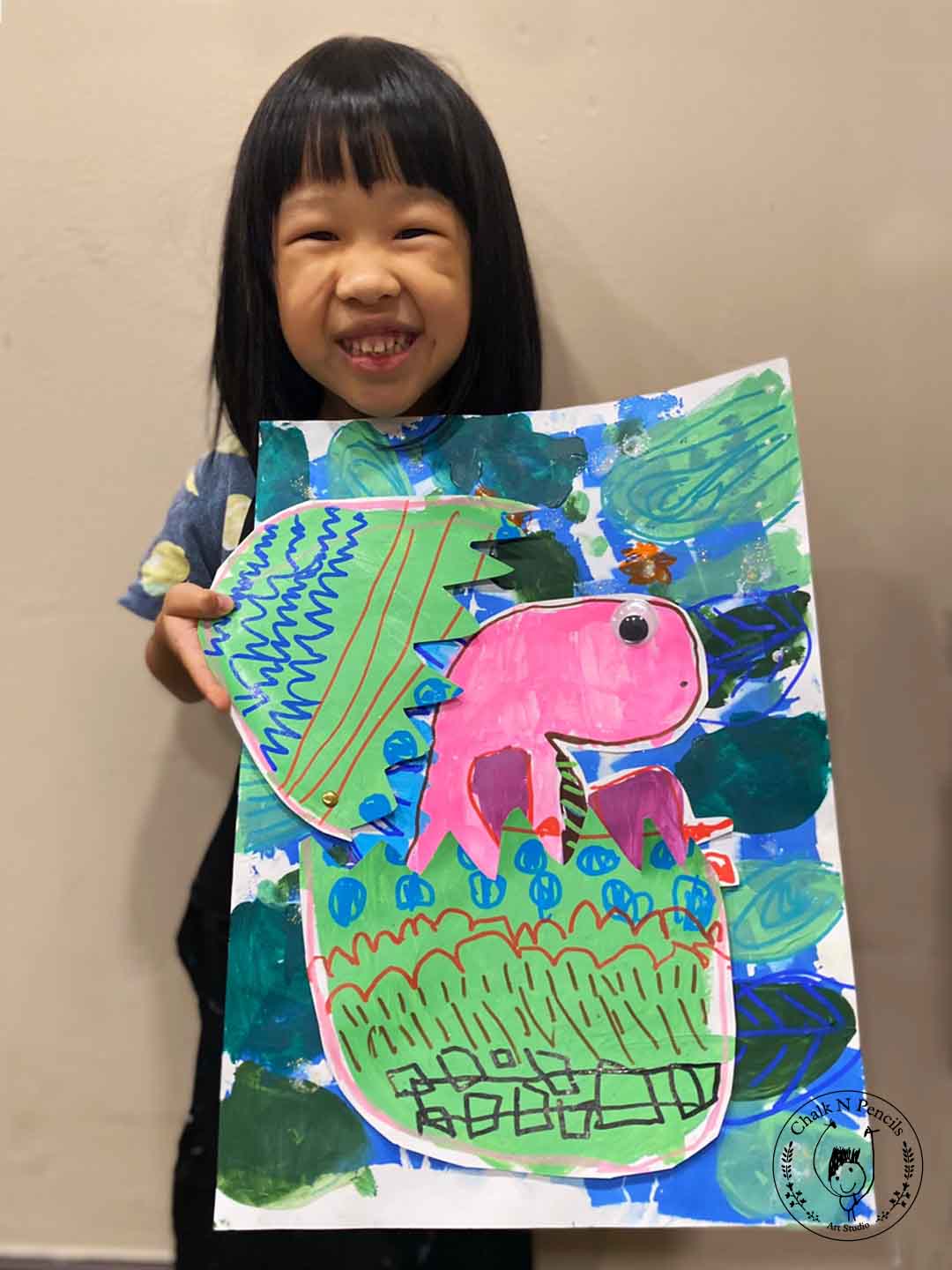
Now symbols appear. You will see the classic tadpole person, a head with legs straight out of it, and objects that float rather than sit on a ground line. Colour is often chosen for fun rather than realism. Your child is working out how to turn ideas into pictures, and the gaps are part of the process.
Children settle on a set of symbols, or schemas, for the things they draw often. A baseline appears at the bottom of the page and a strip of sky at the top, and scenes become more ordered and logical. This is where storytelling in pictures really takes off.
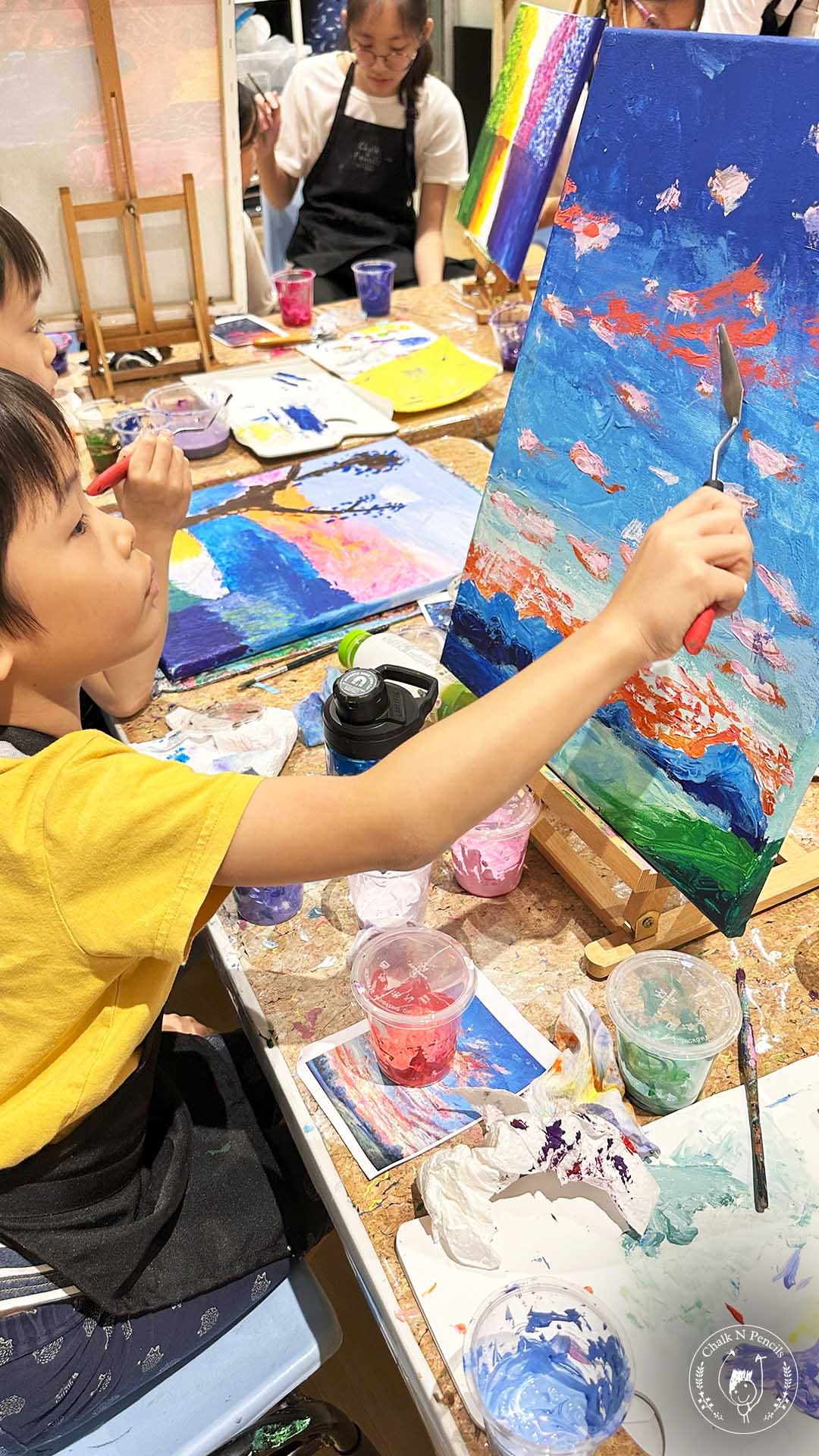
Detail, proportion and overlapping start to matter. Children become more aware of how things really look and, importantly, more self-critical. This is the stage where many declare they are "bad at art" if their work does not match what they can now picture in their head. Reassurance and a few real techniques go a long way here.
Whatever stage your child is in, the principles are much the same:
The dawning-realism stage is where many children either give up or fall in love with art for good. The difference is usually whether someone helps them build skill without crushing their voice. That is exactly the balance we hold in our children's art classes: we teach genuine technique, but we never drill the expression out of a child. Older children working towards an arts-school application can also begin art portfolio preparation at this stage. For the wider case on why all of this matters, see our guide to the benefits of art for children.
Our children's art classes build real skill while keeping a child's voice intact, in small age-grouped sessions. Have a look at how we teach.
It is the natural, staged way children's art grows, from scribbles to symbols to realistic representation. It happens to every child, with or without formal lessons.
Broadly: scribbling (around 2 to 4), pre-schematic symbols (4 to 7), the schematic stage with baselines and ordered scenes (7 to 9), and dawning realism (9 to 12). The ages are approximate.
Almost certainly not. The stages are signposts, not a timetable. Children move through them at their own pace, and many revisit earlier stages whenever they try something new.
Focus on the process, provide open-ended materials, talk about their work rather than judging it, and resist the urge to correct. When they start wanting realism, offer real techniques gently rather than taking over.