Adult Art
·
November 14, 2023
·
5 min read

Urban Sketching in Singapore

A guide to urban sketching in Singapore: where to sketch, a simple grab-and-go kit, and the techniques that make drawing on location feel doable.
Written by
Priscilia

Share

Urban sketching is simply drawing on location, out in the city rather than from a photo, and Singapore is a brilliant place for it. From the Peranakan shophouses of Joo Chiat to the river and the Botanic Gardens, there is always something worth a page. This is a short guide to getting started: what to pack, where to go, and the techniques that make it feel less daunting. Now and then we take our adult students out on plein-air sessions, and these are the spots and tips we keep coming back to.

Group of people by a waterfront holding up their sketches at Clarke Quay
Sketching on location at Clarke Quay.

The essence of urban sketching

Urban sketching is about capturing the world around you as it happens. It involves drawing on location, whether it's bustling city streets, serene parks, or quaint cafes. The charm of urban sketching lies in its spontaneity and the ability to record fleeting moments with quick, expressive strokes.

Urban sketching offers numerous benefits:

  • Mindfulness: it encourages you to slow down and observe your surroundings more closely.
  • Creativity: it challenges you to interpret and depict the world in your own style.
  • Connection: it fosters a deeper connection with the environment and its people.

Getting started with urban sketching

If you're new to urban sketching, here are some tips to get you started:

Choosing the right materials

  • Sketchbook: opt for a portable sketchbook with thick pages that can handle various media.
  • Pencils and pens: start with basic pencils and waterproof ink pens. These are versatile tools for sketching on the go.
  • Watercolours: a small watercolour set can add a splash of colour to your sketches.

What to pack: a simple starter kit

You do not need much to begin. A grab-and-go kit covers most outings:

  • A permanent waterproof ink pen, such as a fineliner.
  • A small, sturdy sketchbook that can take a little water.
  • A compact travel set of watercolours.
  • A water brush pen, so you do not have to carry a pot of water.
  • A bulldog clip to hold your pages steady in the breeze.
  • A lightweight folding stool, plus a hat, water and sunscreen.

Where to sketch in Singapore

One of the joys of urban sketching here is how much sits within a short walk or train ride. A few of our favourite spots:

  • Joo Chiat and Katong: rows of Peranakan shophouses, ornate tiles and shuttered windows. The streets around our Katong studio are some of the most paintable in the city.
  • Robertson Quay and the Singapore River: bridges, bumboats and riverside cafes with the skyline behind, a short stroll from our River Valley studio.
  • Chinatown: temple rooftops, shophouse terraces and busy market lanes, full of detail and colour.
  • Tiong Bahru: gentle art-deco curves, quiet corners and the old market, ideal for a slower session.
  • Singapore Botanic Gardens: rain trees, the bandstand and the lake, when you want greenery and shade over hard edges.
  • Marina Bay and Gardens by the Bay: the Supertrees, the waterfront and the modern skyline for big, dramatic compositions.
  • Little India: shop signage, garlands and constant movement, a workout in colour and energy.

Wherever you go, a shaded spot, a foldable stool and a small kit make all the difference.


Singapore sketches: a few examples

Here is the kind of thing these outings produce, by students in our adult classes.
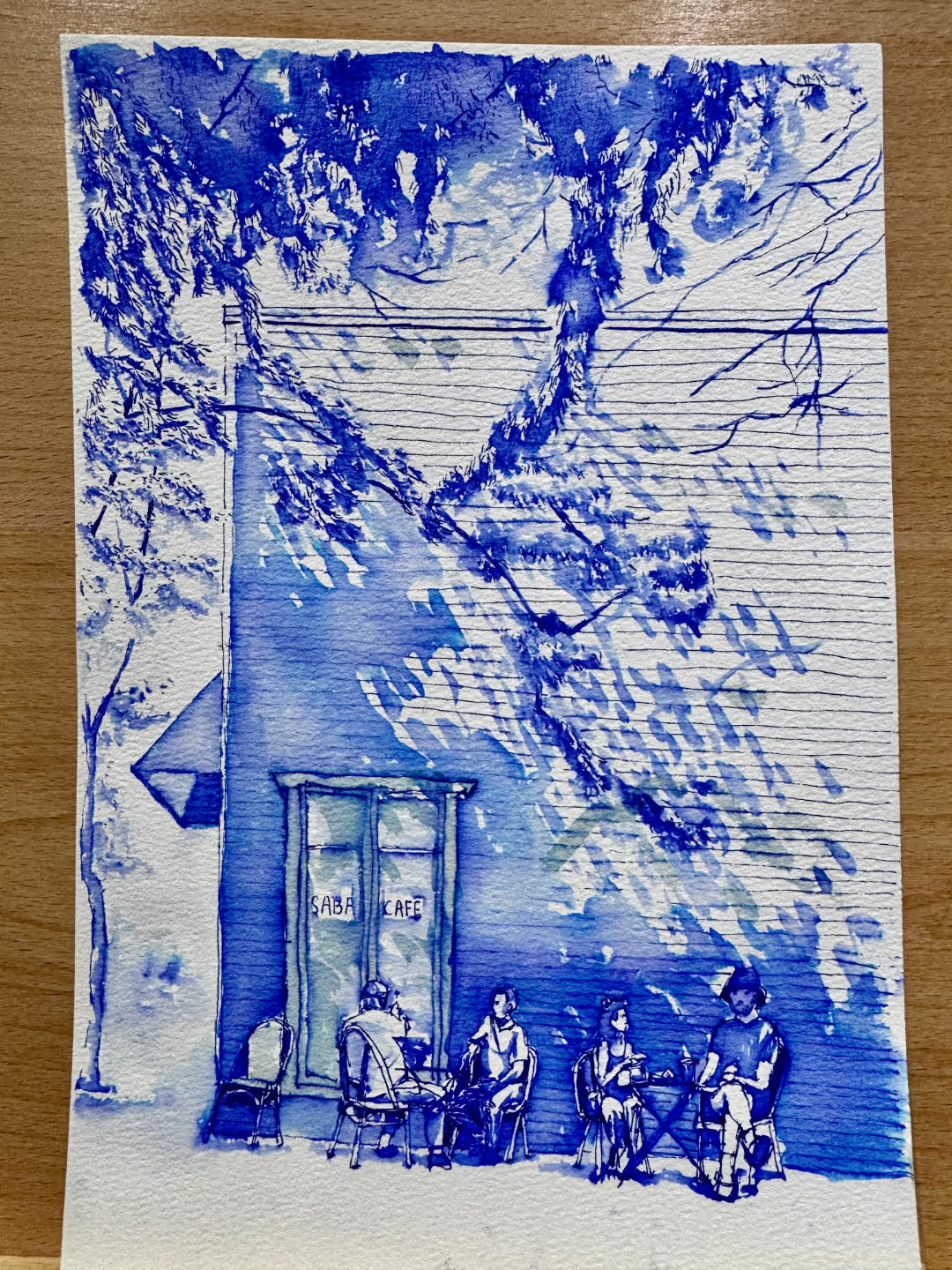
Ink-wash sketch of a Singapore shophouse
An ink-wash study of a Singapore shophouse.
Watercolour study of the Singapore river waterfront
A watercolour of the river, worked up from time spent on location.

Tips for successful urban sketching

To elevate your urban sketching, consider these tips:

Perspective and composition

  • Practise drawing perspective grids to understand how buildings and streets converge.
  • Experiment with different compositions to find dynamic, engaging layouts.

Light and shadow

  • Pay attention to the direction of light and how it casts shadows.
  • Use contrast between light and dark areas to add drama and interest.

People and movement

  • Capture the essence of people with quick, gestural lines.
  • Show movement by repeating elements or using directional lines.

A regular sketching practice

  • Dedicate time each week to sketching in different locations.
  • Review your work regularly to spot areas to improve and to celebrate progress.

Community and resources

For those interested in exploring urban sketching further, consider joining local groups that hold frequent outdoor sessions:

  • Urban Sketchers Singapore: a local community of artists passionate about showing Singapore through on-location sketching. Sketchwalks run monthly on the last Saturday of the month.
  • Weekend Sketchers: a get-together to paint, draw, sketch and share art experiences, mostly on Sundays.
  • Cafe Sketchers Singapore: a friendly group that combines the love of sketching with visits to cafes around the city.
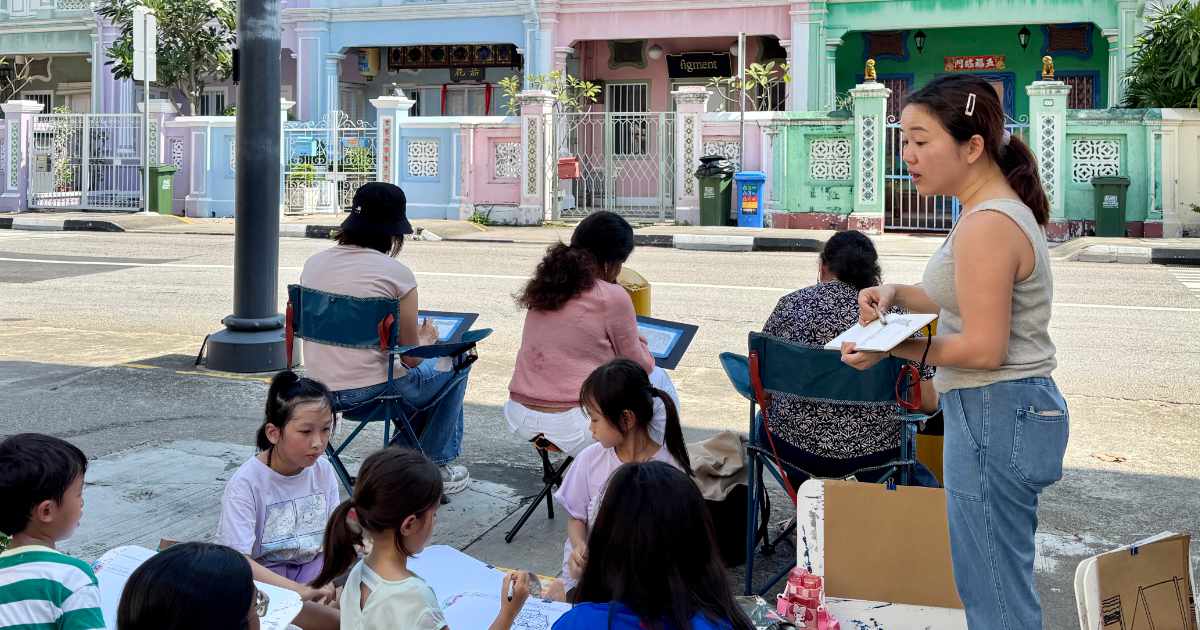
Adults and children sketching and painting outdoors together in Singapore
Out with a local sketching group, where all ages are welcome.

Want to build the skills behind urban sketching?

Our adult art classes develop the drawing, composition and perspective that make sketching on location flow, with beginners welcome. See how a term is structured.

See our Adult Art Classes

How can I improve my confidence in urban sketching?

Confidence comes with practice. Start by sketching familiar places and gradually challenge yourself with more complex scenes. Joining a local sketching group, or enrolling in a structured adult art class, gives you the support and technical foundation to accelerate your skills.

What materials should a beginner urban sketcher start with?

Keep your kit light. A good starting point is a permanent waterproof ink pen, a small travel set of watercolours, a water brush pen, and a quality sketchbook. This combination is versatile and needs minimal setup.

What are good warm-up exercises for plein-air sketching?

Begin with quick, five-minute sketches to loosen your wrist and eye. Focus on gesture drawing to capture the scene's energy and essential lines rather than fine details. A few basic perspective exercises will help you get into the flow.

How do I handle curious onlookers while sketching in public?

Engaging with onlookers is often a positive experience. Be friendly and open to brief conversations; most people are simply curious. If you prefer deep focus, politely thank them for their interest, or use headphones as a gentle cue.

Can urban sketching be combined with other art forms?

Absolutely. Urban sketches often serve as quick studies for more detailed studio work, and can be built into mixed-media collage or digital illustration.