Skip to main content

How to set up an art corner for your child at home: choosing the spot, age-by-age materials, organising for independence, and ideas to keep it in daily use.
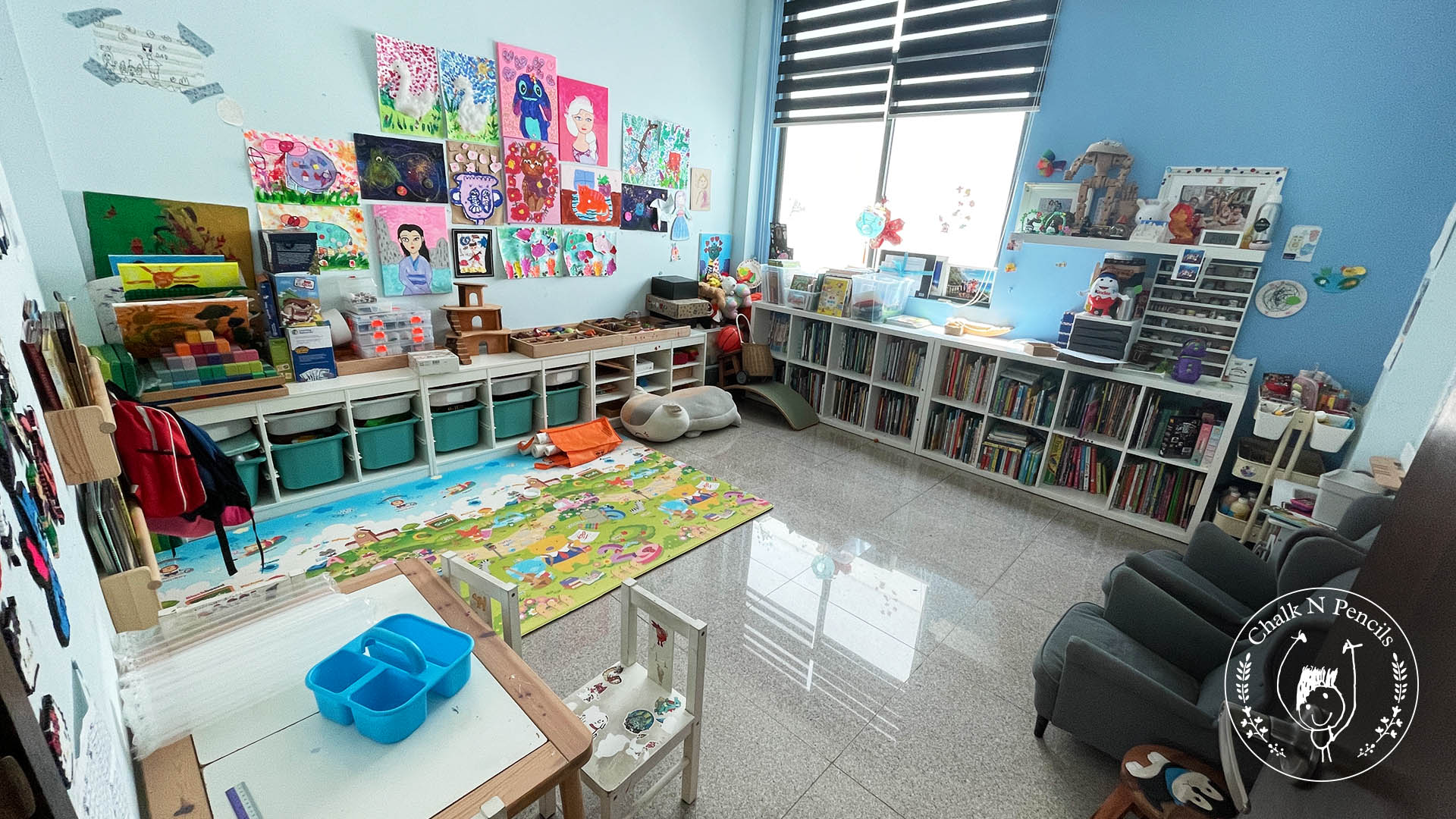
You do not need a spare room or a big budget. A dedicated corner, even a small one, does more for a child's creative habit than a cupboard full of supplies they cannot reach. Creating an art corner for your child at home is less about the perfect setup and more about making art feel within reach every single day.
Here is what actually works, based on years of watching children make, and avoid, art.
Resist the urge to tuck the art corner somewhere out of the way. Children make art when they can see the invitation to do it. A corner of the living room, one end of the dining table, or a spot in their bedroom where they already spend time all work well. What matters is natural light, a surface that can get messy, and being close to where family life happens.
If you are worried about mess, a wipe-clean tablecloth or a roll of kraft paper over the table solves most of it. What you want to avoid is a setup that needs so much preparation and clearing up that your child stops bothering.
The most common mistake is buying materials that are too advanced or too precious. If the paints are expensive, children become afraid to use them freely. If the paper is tiny, they work small and tight. Neither helps.
Focus on washable tempera paints, chunky crayons, large sheets of paper (A3 at least), safety scissors and basic modelling clay. These materials reward exploration over precision.
Introduce watercolours, coloured pencils, fine-tip markers and a simple sketchbook alongside the larger paper. At this stage children start to care about the look of things, and a sketchbook they can call their own becomes important.
Add a small selection of acrylic paints, two or three better-quality brushes and some mixed-media materials. If your child is working towards examinations or a portfolio, align the materials with what they are practising.
One practical note: keep a separate water container, paper towels within reach and an apron hanging right there. Anything that adds friction to starting or cleaning up works against you.
The goal is a child who can find, use and tidy away materials without your help. Open storage works better than drawers at this age: they can see what is there and choose quickly.
Low shelving, a pegboard on the wall, clear jars for pens and brushes, and labelled trays for paper all help. Display finished work on a small pinboard or clip wire nearby. Children who see their own work treated with some seriousness tend to make more of it, and it saves the pile of artwork with nowhere to go.
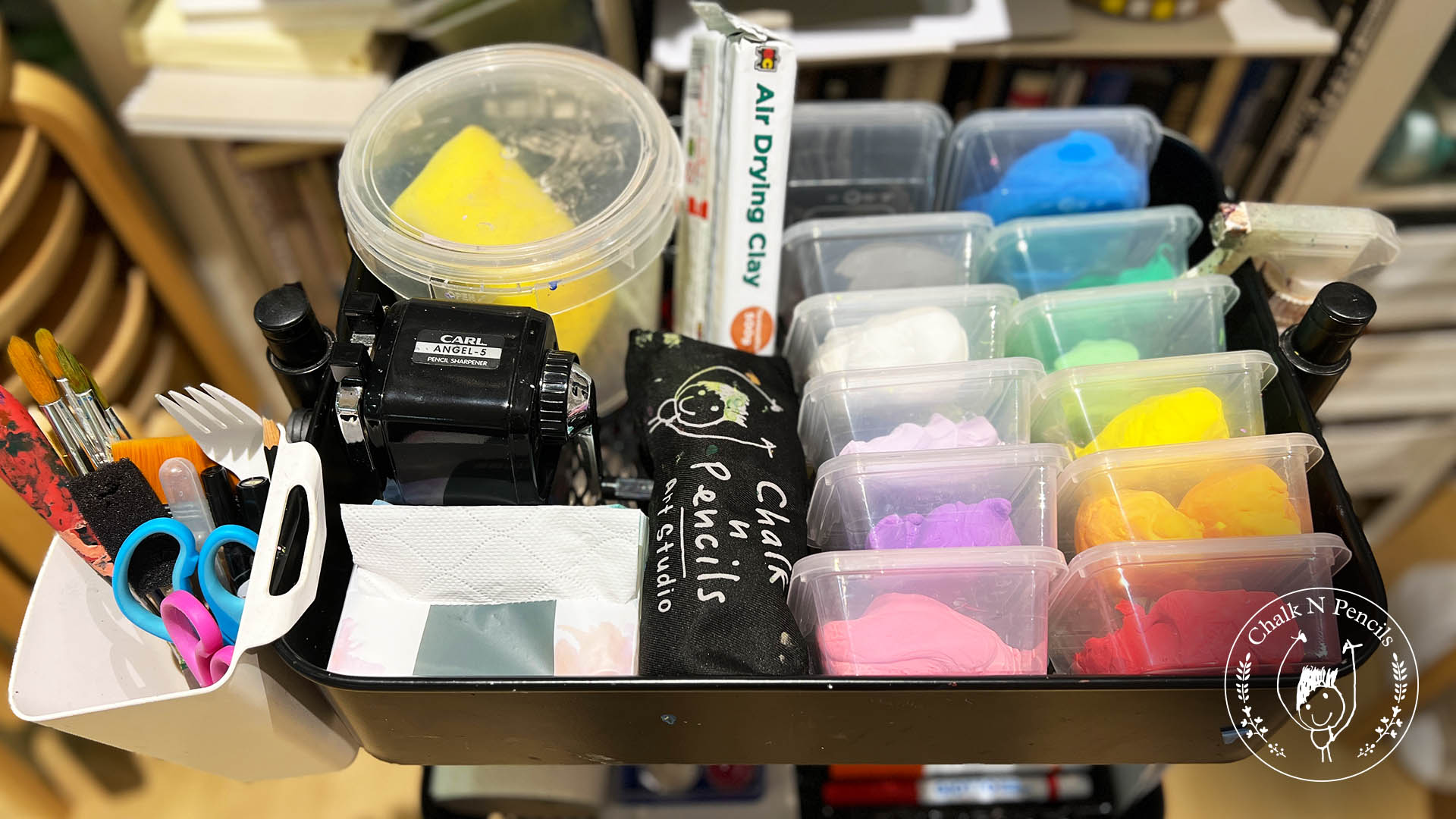
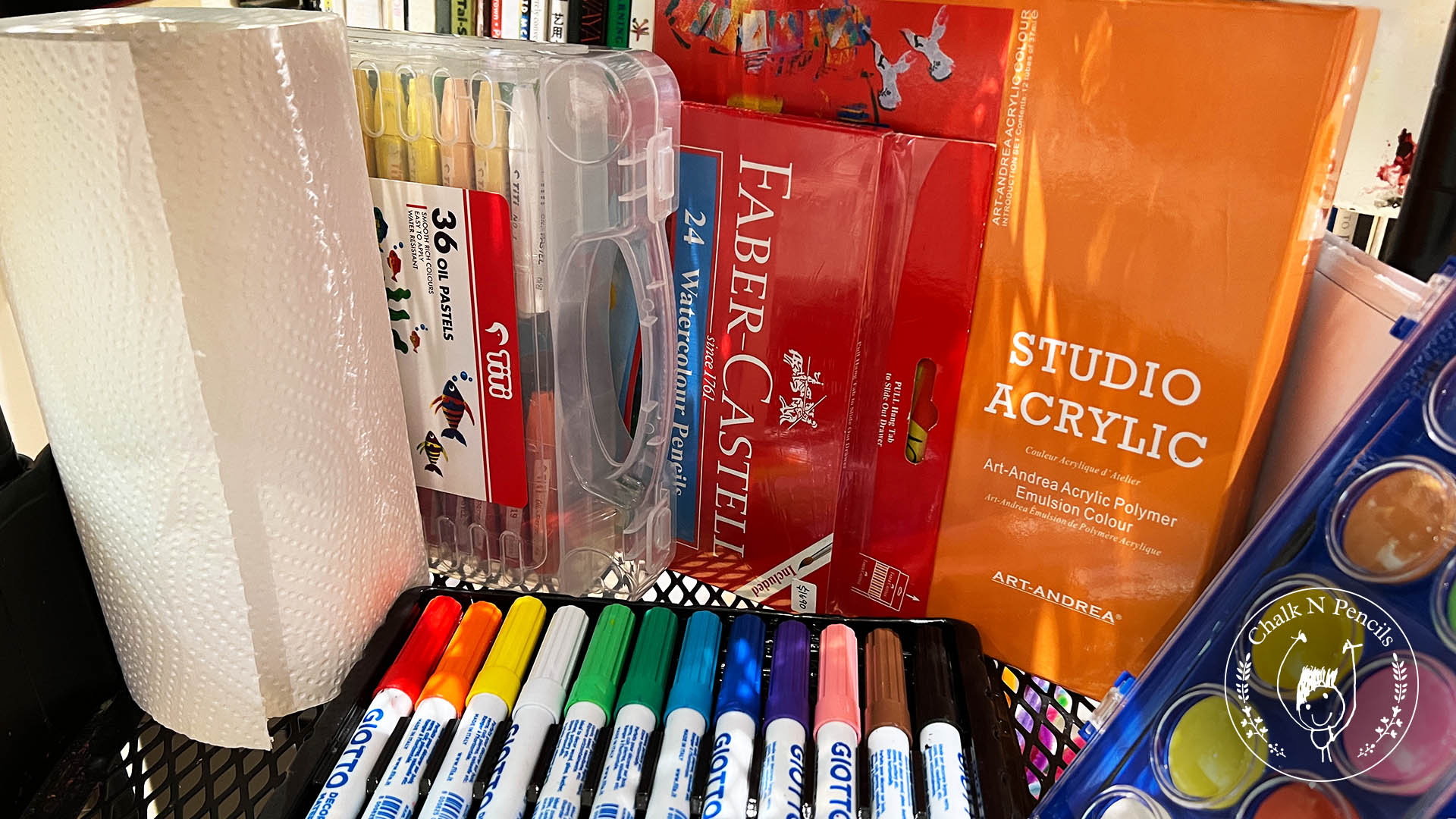
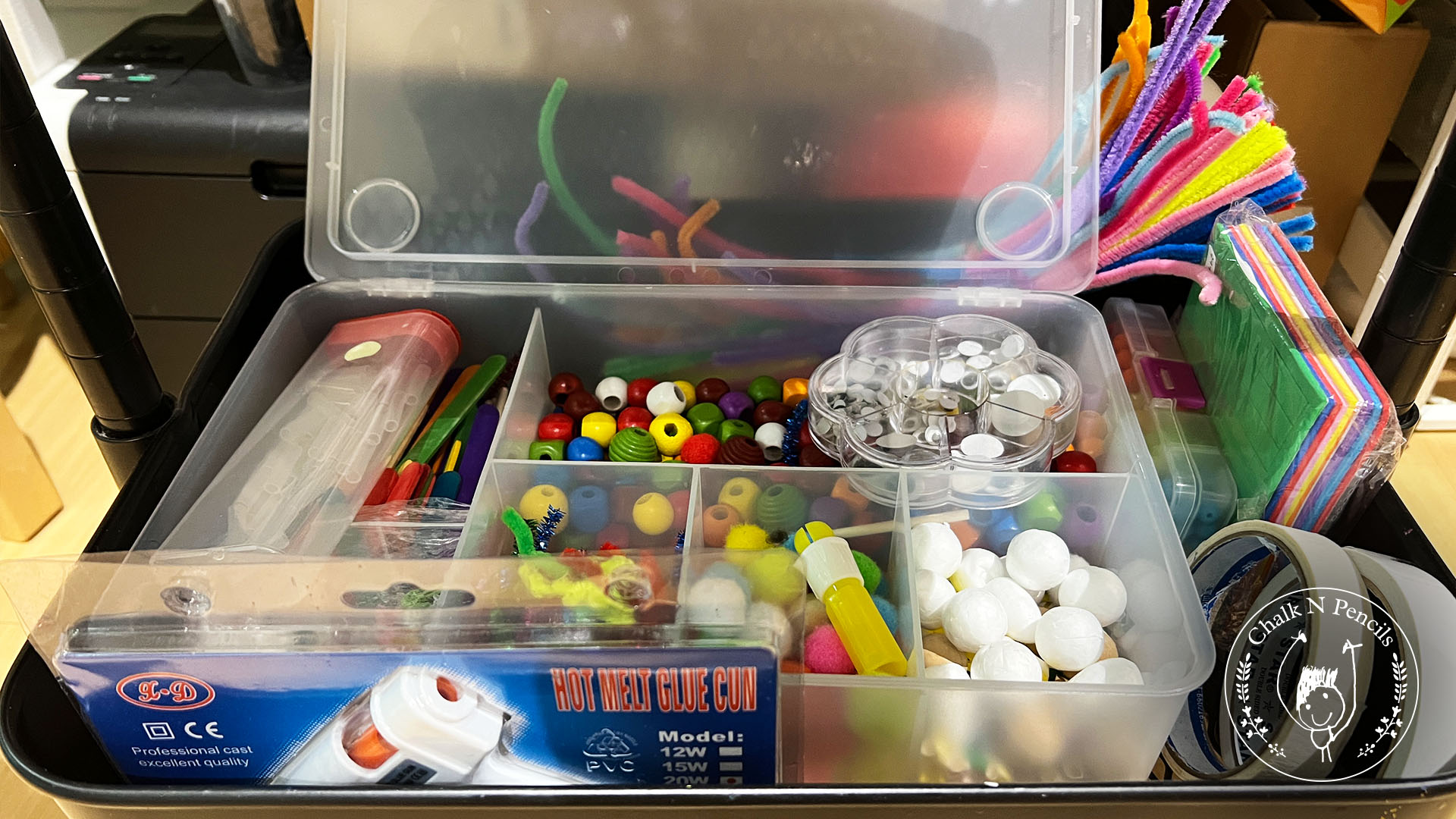
If you do one thing beyond choosing the spot, get a small rolling trolley. The IKEA RÅSKOG is the one most families and studios reach for, ours included: three tiers, easy to wipe down, and it rolls to the table for a big session then tucks back into the corner afterwards, which matters in a Singapore flat where space is tight. Give each tier a job and keep the top two within your child's reach so they can start and tidy up on their own. Here is how we kit ours out.

Top basket, with a side caddy: the things in use right now. Crayons or oil pastels, felt-tip markers and a few sheets of paper, with pencils and brushes standing in the side caddy so the first thing your child reaches for is something to draw with.
Middle basket: paints and the tools that go with them. Washable tempera or watercolours, short-handled brushes, glue and a pair of safety scissors.
Bottom basket: the messier and bulkier bits, and anything you would rather hand out yourself. Spare paper, modelling clay, aprons and refills.
Setting up the corner is the easy part. The harder thing is making sure it does not slowly become a dumping ground for homework and odds and ends. A few ideas that help:
The home corner does most of the work, but there is one thing it cannot give: seeing what other children make, learning specific techniques and having a teacher respond to the work. That is the difference a structured class adds once a child's interest has genuinely grown.
Our children's art classes complement the art corner at home, with real techniques and a teacher's eye, in small age-grouped sessions. Take a look at how the classes run.
At a minimum: a mess-friendly surface, good light, open storage the child can reach, age-appropriate materials, and a small spot to display finished work.
One end of the dining table works well. Use a wipe-clean cloth, keep materials in a single caddy or on one low shelf, and pack it into a box between sessions. Accessibility matters more than size.
From around three, with supervision and toddler-safe materials. As they grow, adjust the materials to match the stage.